WeldPilot: advanced simulation to industrialise FSW with less uncertainty
Define parameters, compare options and prepare more focused physical trials for Friction Stir Welding processes. WeldPilot combines thermo-mechanical simulation, expert judgement and knowledge transfer to help your team move towards a more robust and repeatable process window.
The challenge is not trying FSW. The challenge is industrialising it with control.
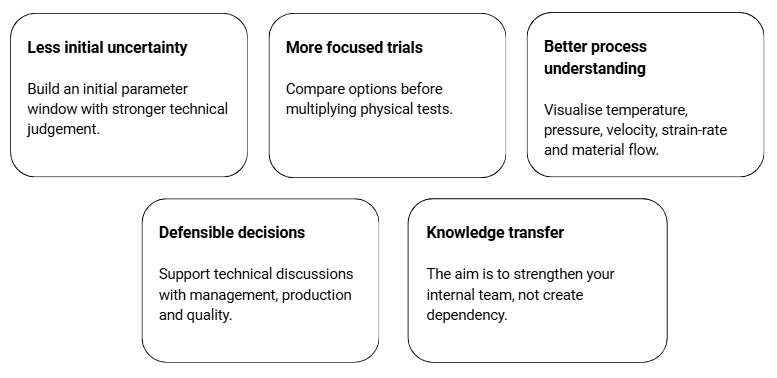
For a first critical FSW component, every failed trial can consume material, engineering hours and internal confidence. The goal is not to remove physical testing, but to start from a stronger technical hypothesis, reduce unpromising combinations and make clearer decisions across engineering, production and quality.
What WeldPilot is
WeldPilot is a simulation and technical support solution for analysing and optimising Friction Stir Welding processes in industrial environments. It helps study the thermal and mechanical behaviour of the process, material flow, tool influence and key process variables before expanding physical validation.
What it brings to your FSW project
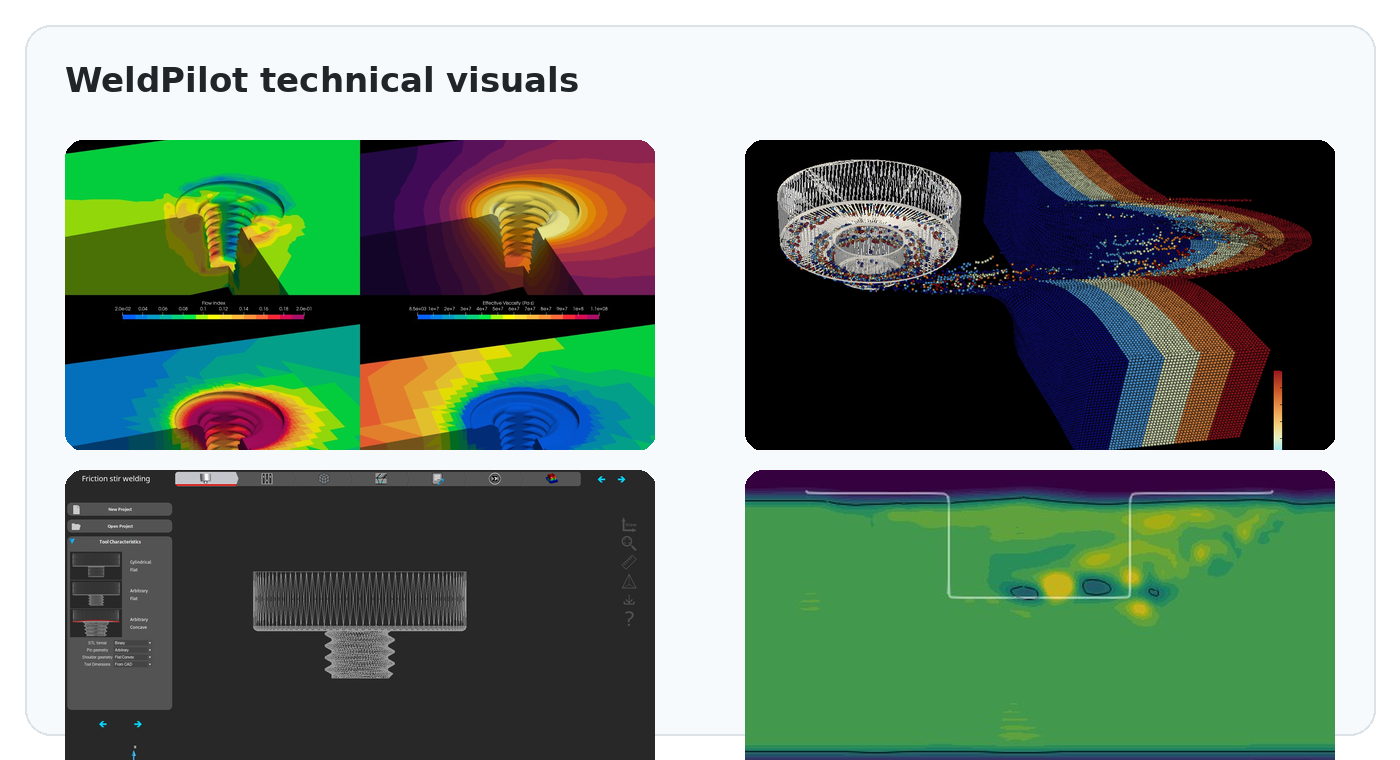
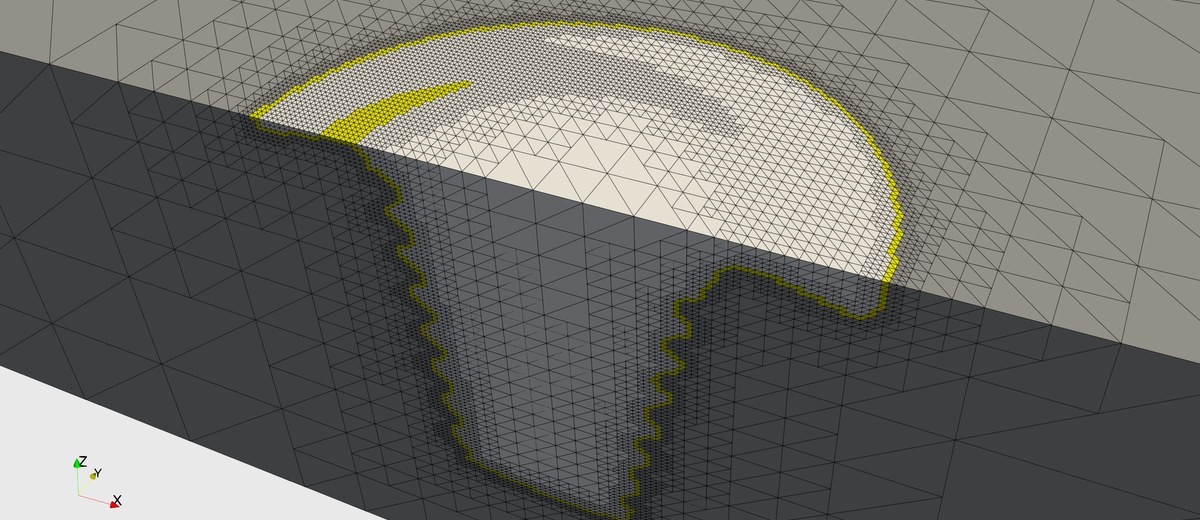
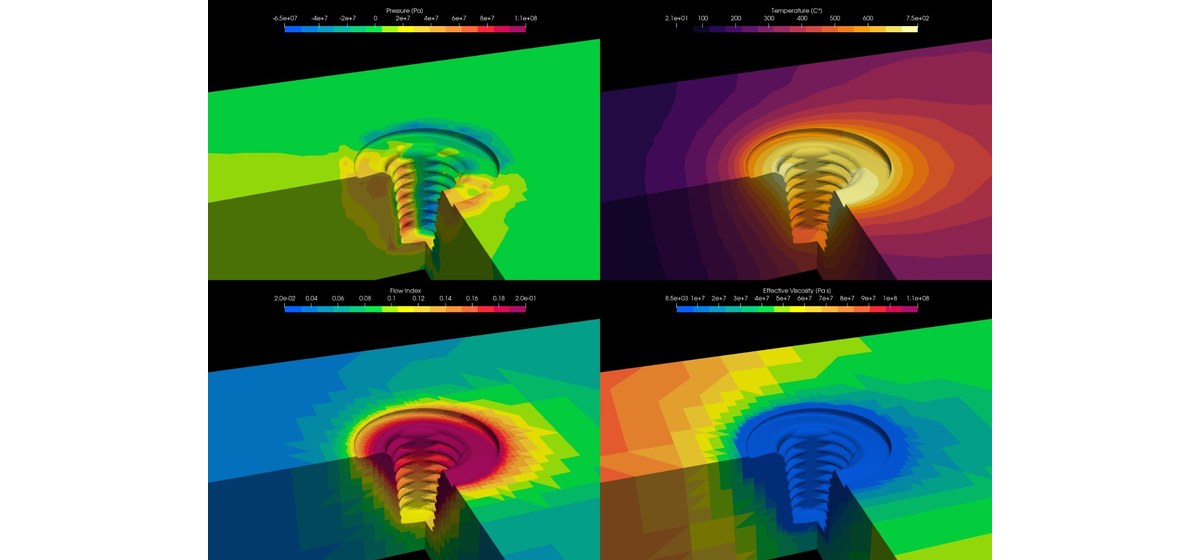
The platform offers comprehensive modeling capabilities that cover complex tool geometries, the tool’s tilt angle, and critical process features, including frictional heat generation and plastic deformation, thermal dissipation, and material flow.
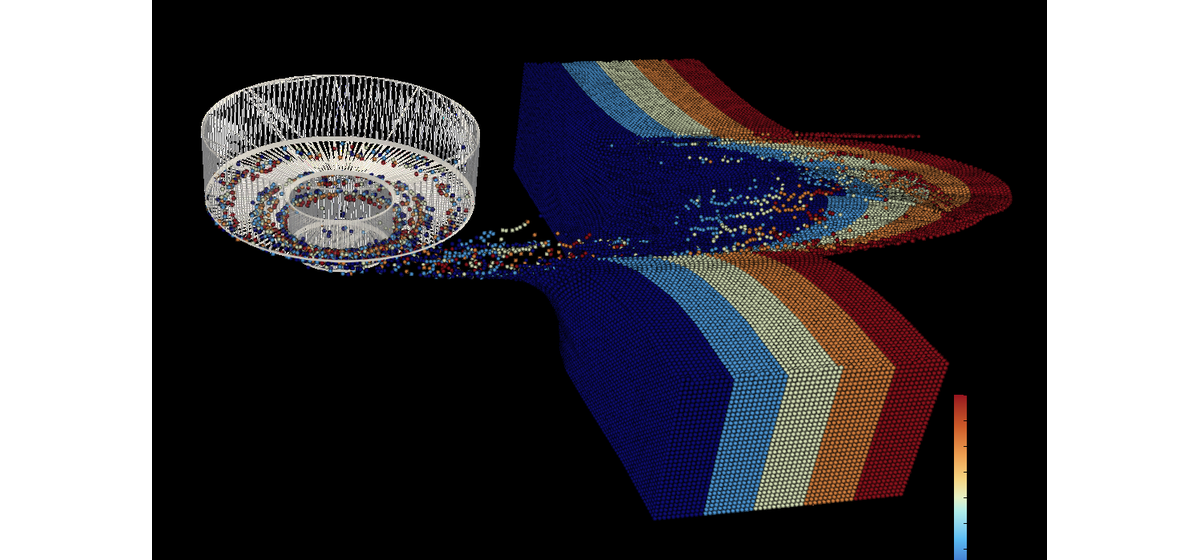
Additionally, it features a particle tracking module to simulate material flow paths, enabling the prediction of internal defects—such as oxide line propagation, voids, and tunnel defects—prior to physical validation.

Who it is intended for
Working methodology
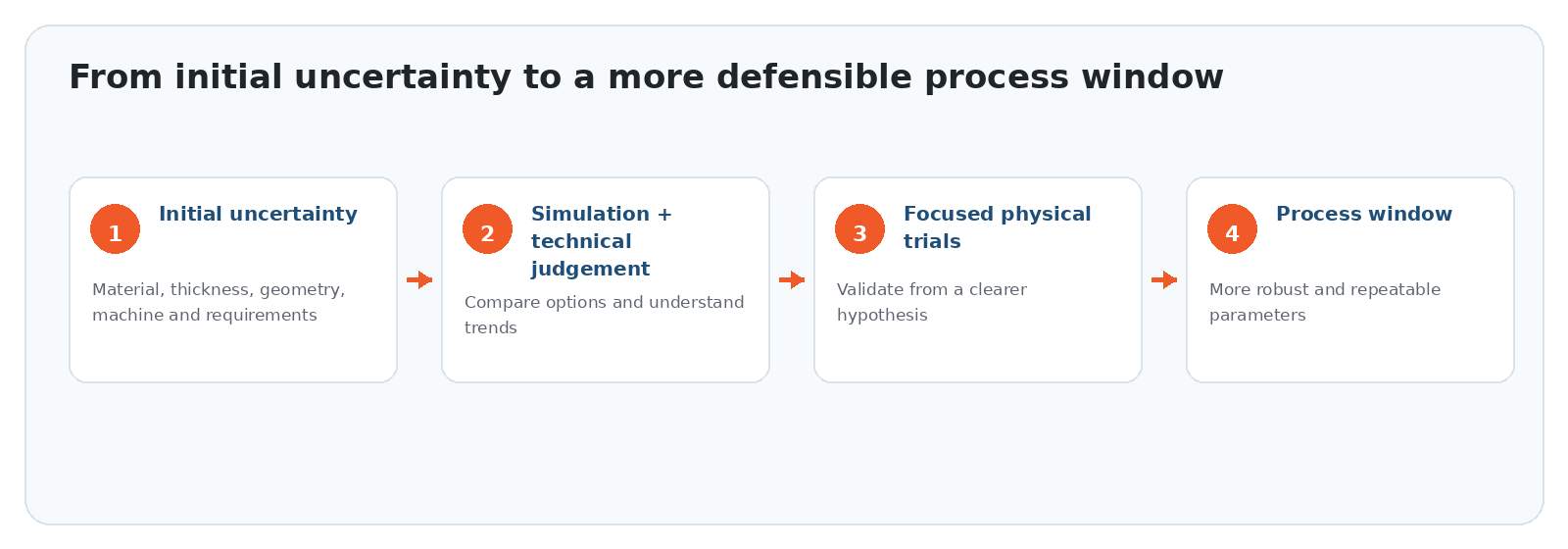
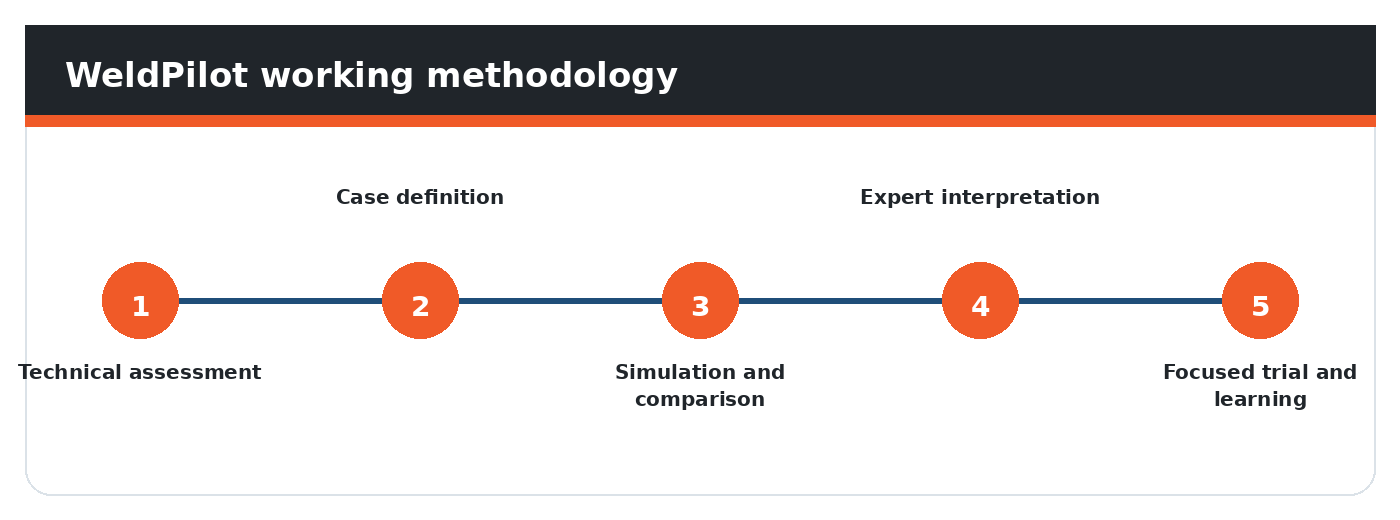
- Technical assessment: Review of material, thickness, geometry, machine, tool, quality targets and production constraints.
- Case definition: Model preparation, boundary conditions, initial parameters and comparison criteria.
- Simulation and comparison: Analysis of thermo-mechanical fields, loads, material flow and possible quality indicators.
- Interpretación experta: Translation of numerical results into process decisions, trial hypotheses and recommendations.
- Focused trial and learning: Support for physical validation from a clearer baseline and knowledge transfer to your team.
Technical capabilities
- Coupled thermo-mechanical modelling of the FSW process.
- Analysis of heat generation from friction and plastic deformation.
- Material flow assessment through velocity fields and particle tracing.
- Evaluation of complex tool geometries and tool tilt angle.
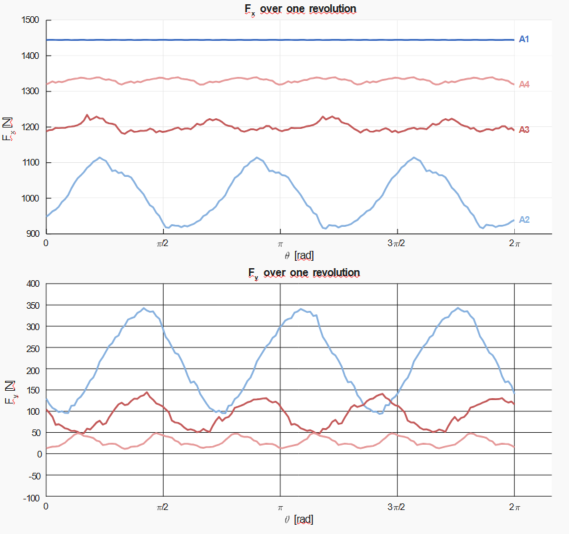
- Estimation of loads, reaction forces and force footprints.
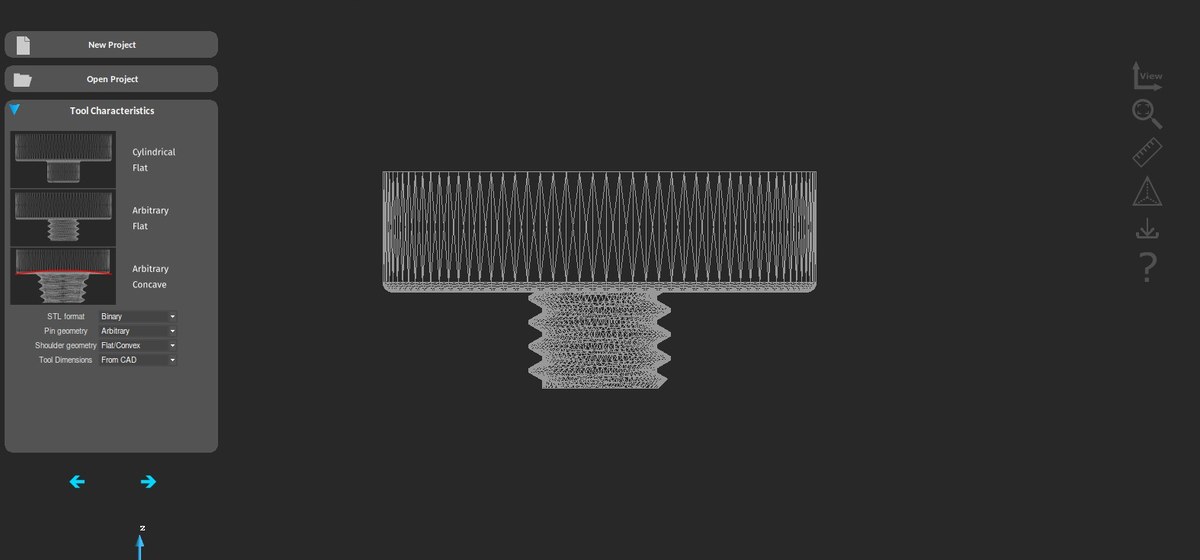
- CAD-to-simulation workflow for faster case preparation.
- Local or HPC execution depending on project scope.
- Graphical interface for case creation, simulation launch and post-processing.
Industrial applications





Long aluminium joints, panels and structural subassemblies.
Parameter optimisation and fewer iterations in high-volume or high-value parts.
Analysis of demanding joints where process control is critical.
Aluminium components and structures where repeatability matters.
New FSW applications, advanced materials and special processes.
Technology developed on a scientific basis with an industrial focus
WeldPilot stems from CIMNE’s advanced expertise in numerical simulation and is tailored for industrial use through COMPASS. This combination brings together computational models, technical know-how, and applied support for real-world manufacturing projects.
Frequently asked questions
Does WeldPilot replace physical trials?
No. WeldPilot helps prepare more focused, intelligent and defensible trials. Physical validation remains necessary and depends on material, geometry, machine, tool and quality requirements.
Is it suitable for any FSW part?
It should not be presented that way. The first step is to review the material, thickness, geometry, tool, machine and industrial objective to define a realistic scope.
What does it add compared with direct trial-and-error?
It provides an initial technical hypothesis, supports option comparison and helps reduce unpromising parameter combinations before spending time, material and engineering hours.
Do we need previous FSW experience?
Not necessarily, but the internal technical team should be involved. The goal is to transfer judgement and help the team make better decisions.
Which sectors can benefit?
Rail, automotive, aerospace, shipbuilding, energy, advanced transport and manufacturers working with demanding FSW joints.
Do you have a critical FSW project?
Share your material, thickness, geometry, tool, machine and quality target. We will help you assess how WeldPilot can reduce uncertainty and prepare an initial technical route.