
In May 2026, Compass Ingeniería y Sistemas, together with CIMNE, took part in the International Friction Welding Conference 2026 with a joint stand at TWI, Granta Park, Cambridge, UK. The event brought together the international friction welding community and combined the 14th International Symposium on Friction Stir Welding with the 6th International Symposium on Linear Friction Welding, covering technologies such as Friction Stir Welding, Linear Friction Welding, Rotary Friction Welding, Friction Stir Processing, non-destructive testing and numerical modelling of friction-based processes. (ifwconference.com)
The conference provided an ideal setting to present WeldPilot to the global market: a high-performance simulation tool for the analysis and optimisation of Friction Stir Welding (FSW) processes in industrial environments. Developed at CIMNE and commercialised by Compass, WeldPilot is designed for integration with HPC systems and enables efficient modelling of the thermal and mechanical behaviour involved in FSW. (CIMNE)
From advanced research to industrial FSW decision-making
Friction Stir Welding is a solid-state joining process in which a rotating, non-consumable tool generates heat through friction and plastic deformation while stirring material along the joint line. For industrial applications, especially in aerospace, automotive, rail and shipbuilding, the challenge is not only producing a weld, but defining a robust process window that delivers repeatable weld quality with controlled defects, distortion and mechanical performance. (complas2025.cimne.com)
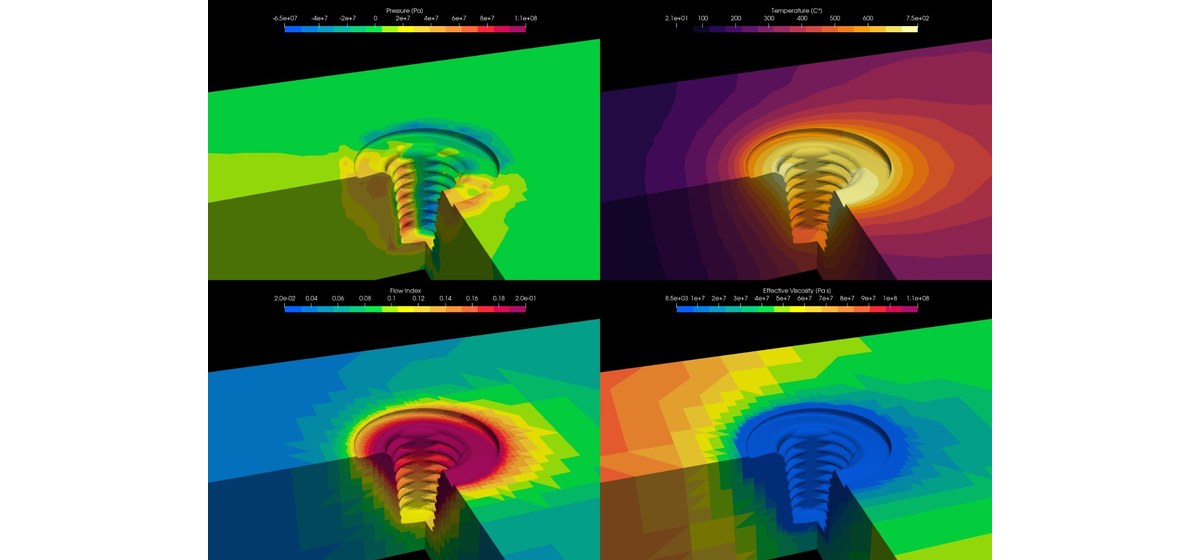
WeldPilot addresses this challenge by supporting the simulation of key FSW phenomena, including complex tool geometries, tool tilt angle, frictional and plastic heat generation, thermal dissipation and material flow. The platform also includes particle-tracking capabilities to analyse material trajectories and assess the risk of internal defects such as oxide line propagation, voids and tunnel defects before committing to further physical validation. (CIMNE)
Latest CIMNE developments presented at IFWC 2026
The technical programme at IFWC 2026 also included recent CIMNE developments in FSW modelling and process qualification. Henning Venghaus, CIMNE, presented “Qualification of the FSW Process Using an Advanced Numerical Framework” in the Friction Stir Welding: Quality Control session, while Narges Dialami, CIMNE, presented “Efficient Thermo-Mechanical Field Prediction in FSW Using Model Reduction Techniques” in the Friction Stir Welding: Thermal Modelling session. (ifwconference.com)
These contributions reflect the direction in which advanced FSW simulation is moving: from conventional trial-and-error parameter studies towards faster, more physics-based and qualification-oriented workflows. Current CIMNE work in FSW includes advanced finite element frameworks for studying process parameters and tool shapes, predicting material flow, temperature distributions, tool reaction forces, metallurgy and potential weld defects. (complas2025.cimne.com)
A recent CIMNE contribution on CutFEM-based simulation frameworks highlights the use of non-body-fitted meshes, arbitrary tool geometries, direct CAD file processing and comparison of simulated temperature evolution curves and reaction forces with experimental data. This type of development is essential for reducing pre-processing effort and improving the industrial usability of numerical FSW simulation. (complas2025.cimne.com)
Reducing trial-and-error in FSW optimisation
For engineering teams working with Friction Stir Welding, the cost of an unsuccessful test campaign is not limited to material, machine time or inspection. The larger issue is often the lack of a clear explanation for why a defect has appeared.
Tunnel defects, voids, lack of consolidation or inconsistent weld quality can result from a complex interaction between tool rotational speed, traverse speed, axial force, plunge depth, tool geometry, heat input and material flow. Without a reliable numerical framework, teams may continue changing parameters without understanding whether the next test is targeting the real physical cause of the defect.
WeldPilot helps advanced manufacturing teams move from empirical iteration towards more informed process decisions. By combining numerical simulation, engineering expertise and training, Compass and CIMNE support industrial teams in defining better starting parameters, investigating defect formation and planning the next technical step with greater confidence.
Compass and CIMNE: software, engineering support and training
Compass is a consultancy company specialised in engineering design, numerical analysis and simulation, providing software and advanced engineering support for industrial, naval, renewable energy and civil engineering applications. (compassis.com)
Through WeldPilot, Compass and CIMNE bring advanced FSW simulation closer to industrial users, helping engineering and R&D teams assess process behaviour, explore process windows and support weld quality improvement before further physical trials.
If your team is already running FSW trials and needs to understand tunnel defects, material flow or process window sensitivity, Compass can help assess whether WeldPilot is suitable for your next technical step.
Contact Compass Ingeniería y Sistemas to learn more about WeldPilot, FSW simulation, engineering support and training.